The Ownership Margin: Why Private Aviation Value Is Created Between Flights
The most valuable private aviation experience is not defined by the aircraft alone. It is created by the operational intelligence, safety discipline and continuity that surround every flight.
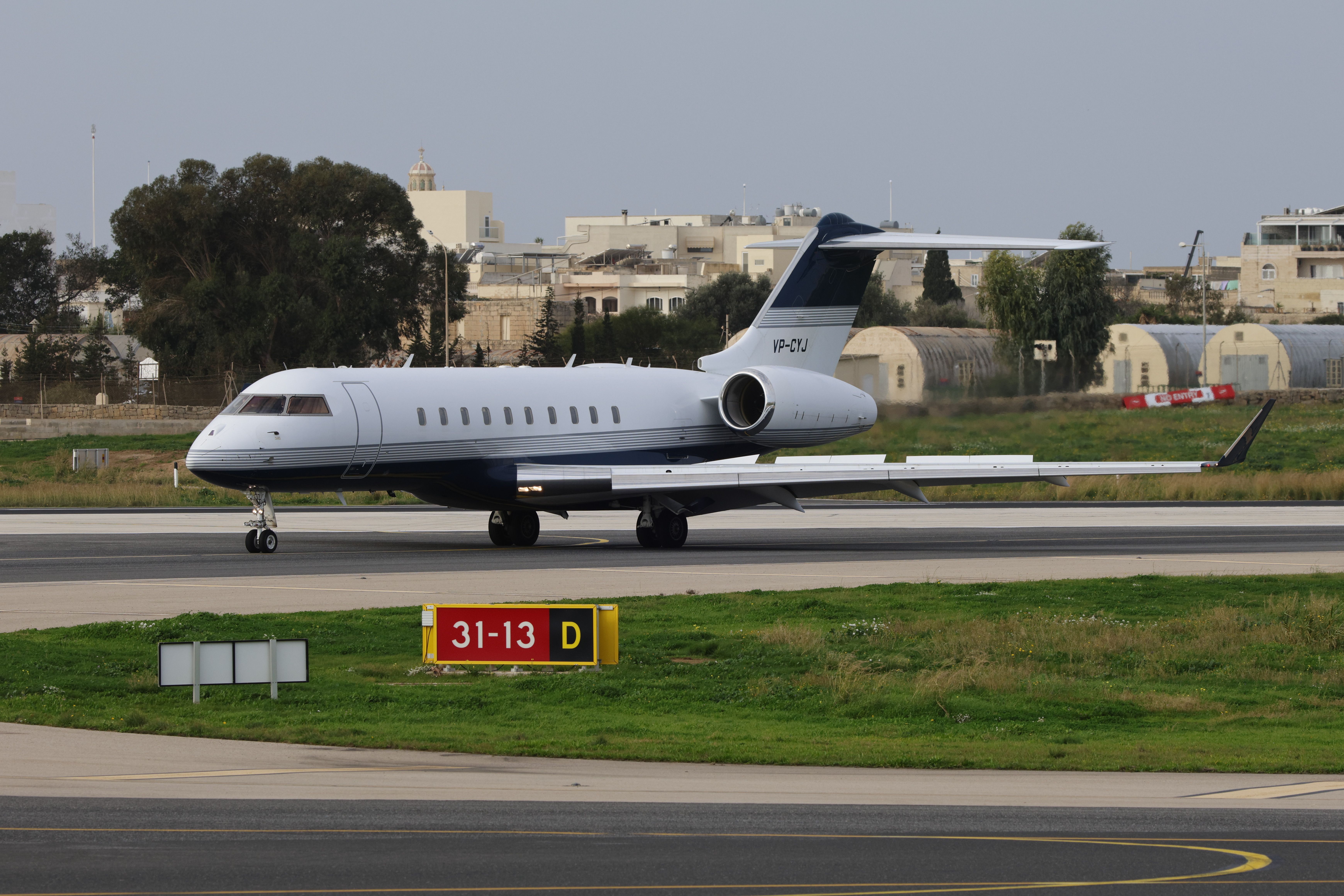
Private aviation is often described through visible assets: aircraft range, cabin design, flight time and access to prestigious airports. Those details matter, but they do not fully explain why some private aviation relationships feel effortless while others remain dependent on constant coordination.
The decisive difference is usually found between flights. It is present in the quality of the operating model, the discipline of safety management, the consistency of the service team and the ability to translate a client's changing schedule into a reliable global mobility plan.
For a VERTU England client, private aviation should therefore be considered less as a booking transaction and more as an ownership experience - one in which time, privacy and operational confidence are protected as carefully as the aircraft itself.
The aircraft is only one part of the proposition
A long-range aircraft can connect continents, but the aircraft alone cannot manage the complexity surrounding a global journey. Aircraft selection must be matched with mission requirements: passenger profile, route, runway access, working time, overnight comfort, baggage, local ground arrangements and the need for schedule flexibility.
Publicly available fleet information from leading private aviation providers illustrates the breadth of this decision. VistaJet presents aircraft across the Bombardier, Gulfstream, Embraer, Cessna and Dassault families, with different ranges, cabin configurations and airport capabilities. This is not simply a catalogue of luxury interiors. It is a reminder that the correct aircraft is the one that fits the purpose of the journey.
The same principle applies to ownership and membership. VistaJet describes investment-free membership options, access to a consistent branded fleet and different availability structures according to anticipated annual flying requirements. Flexjet's 2025 introduction of the Gulfstream G700 similarly shows how the market is evolving through a combination of aircraft access, shared ownership, dedicated crews and a broader service ecosystem.
The conclusion is clear: the value of private aviation is not captured by aircraft specifications alone. It is created by the system that turns those specifications into dependable use.
The real luxury is operational margin
In luxury travel, margin means having room to respond before a problem becomes visible to the client. It means allowing enough time to review a route, enough intelligence to evaluate an aircraft substitution, enough experience to understand regional airport constraints and enough communication discipline to keep every stakeholder aligned.
This margin is especially important for owners and frequent users. A global itinerary rarely ends when the aircraft lands. It may involve a meeting that moves by several hours, a change in the number of passengers, a new destination, a discreet transfer requirement or a return sector that must remain open. The aviation manager's role is to absorb that movement without allowing the experience to become noisy.
This is where a private aviation concierge must operate differently from a conventional charter broker. The task is not merely to find a flight. It is to construct a chain of decisions in which aircraft, crew, airport, timing, ground mobility and client preferences remain coherent.
For VERTU, this is the meaning of seamless ownership: the client retains control of the journey while the operating complexity remains professionally managed in the background.
Safety is a management language, not a slogan
Safety should never be treated as a decorative promise in premium aviation. It is a management process that must be visible in the structure of decisions, records, communication and accountability.
The U.S. Federal Aviation Administration defines a Safety Management System as a formal, top-down and organisation-wide approach to managing safety risk and ensuring the effectiveness of safety controls. The FAA further identifies safety policy, safety risk management, safety assurance and safety promotion as its four core components.
This framework offers a useful reference point for private aviation clients. A credible aviation management relationship should be able to explain how risk is assessed, how operational information is escalated, how changes are documented and how lessons are carried forward. The point is not to burden the client with technical procedure. The point is to ensure that reassurance is supported by a repeatable operating discipline.
In practice, this means asking better questions. Who is responsible for the flight operation? How are aircraft and crew suitability reviewed? What happens when weather, airport restrictions or aircraft availability changes? How are local regulatory requirements coordinated across jurisdictions? What is the communication protocol when a decision must be made quickly?
The most refined service is not the one that claims nothing will change. It is the one that is prepared to manage change calmly, transparently and safely.
Consistency matters more than spectacle
The private aviation sector has invested heavily in spectacle: new aircraft, distinctive liveries, bespoke cabins and highly curated destinations. These elements can be meaningful, but the long-term test of a premium service is consistency.
A client travelling from London to the Middle East, from Europe to North America or onward to Asia should not need to rebuild the service relationship at every stage. Preferences should be understood. Documentation should be orderly. The service language should remain discreet. The same standard of attention should survive changes in time zone, aircraft type, destination and itinerary.
This is why branded fleets and membership structures have become influential in the market. They seek to make the experience more recognisable and predictable across a broad geography. Yet consistency should not be confused with uniformity. A strong global aviation service preserves its standards while adapting intelligently to the client, the aircraft and the route.
For a VERTU global travel and mobility concierge, the objective is not to make every journey identical. It is to make every journey feel considered.
A more intelligent way to evaluate private aviation
Before choosing an aviation model, clients may find it useful to evaluate five forms of operational value:
| Evaluation area | The question that matters | Why it matters |
|---|---|---|
| Access | Can the model provide suitable aircraft when and where they are needed? | Availability is only valuable when it corresponds to the client's actual travel pattern. |
| Fit | Is the aircraft selected for the mission rather than for status alone? | Range, cabin, runway and passenger requirements directly shape the journey. |
| Safety discipline | Is safety managed through a formal and accountable process? | A structured system supports better decisions before, during and after the flight. |
| Continuity | Will the service remain coherent across destinations and changing schedules? | Global travel becomes easier when information and preferences travel with the client. |
| Ownership efficiency | Does the model reduce the time and attention required from the client? | The purpose of premium management is to protect decision quality and personal time. |
This framework does not prescribe one universal solution. Depending on annual flying hours, geography, passenger needs and desired control, the appropriate model may involve charter, membership, shared ownership, aircraft ownership or a managed combination. The professional role is to clarify the trade-offs rather than push every client toward the same structure.
The VERTU standard: quiet competence across the journey
The strongest private aviation experience is rarely the loudest. It is felt in the absence of friction: the right aircraft presented without unnecessary choice, the itinerary adjusted before the client needs to ask, the ground transfer aligned with the arrival window and the relevant information communicated with precision.
That quiet competence is the natural meeting point between private aviation and the VERTU philosophy. Luxury is not measured only by what is added to a journey. It is also measured by what the client no longer has to carry: uncertainty, fragmented communication, avoidable delay and the burden of managing operational detail alone.
Global Top Private Jet Operation and Management is therefore best understood as a discipline of stewardship. It protects the aircraft decision, the safety process, the schedule and the client's experience as one connected system.
For those seeking seamless, safe and efficient air travel ownership, the question is not simply, "Which aircraft can take me there?" The more important question is, "Which operating partner can make the entire journey worthy of my time?"
That is where the ownership margin is created - and where premium private aviation begins to mean more than flight.