The Operating Layer: Why Global Private Aviation Is a Management Discipline
The most dependable private aviation experience is not defined by the aircraft alone. It is created by the operating layer that aligns safety, availability, aircraft choice, crew, maintenance and ground coordination into one discreet global service.
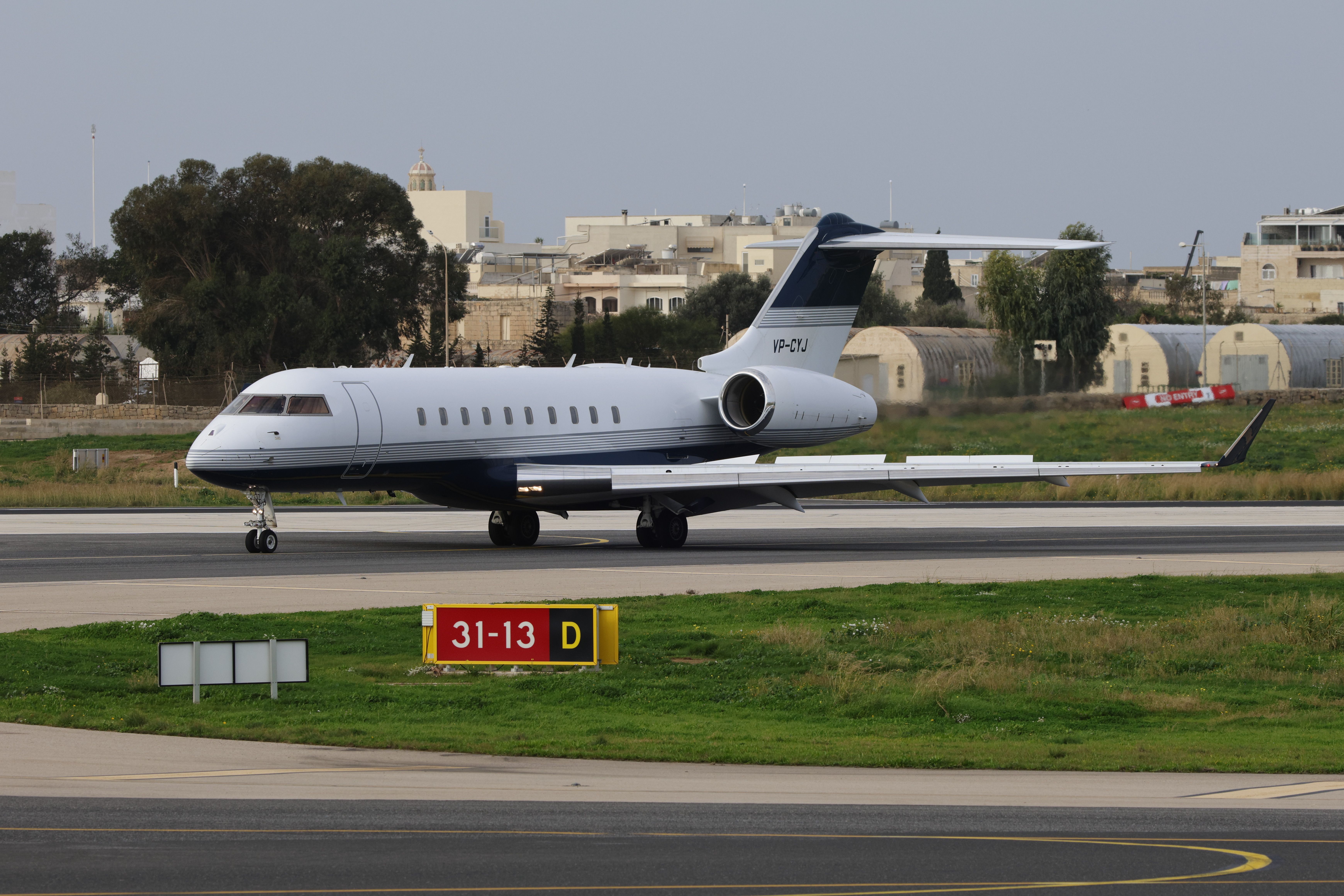
Private aviation is often described through its visible advantages: a shorter journey to the airport, a quieter cabin, a more flexible departure time, or an aircraft selected for the mission. Those benefits are real, but they are not the whole product. For an owner, executive or family moving between multiple countries, the more consequential question is what happens behind the itinerary.
A dependable private aviation experience is created by an operating layer: the disciplined coordination of aircraft access, flight planning, crew, maintenance, regulatory requirements, airport handling and the service preferences that make each journey feel considered rather than improvised. This is the layer where convenience becomes consistency.
For VERTU England, the relevant lens is not private flying as display. It is private aviation as a form of global mobility management: seamless, safe and efficient air travel ownership, supported by a carefully governed network of specialists.
The aircraft is only one part of the decision
A premium aircraft can offer range, cabin comfort and technology. Yet the aircraft itself does not answer the operational questions that arise around a complex travel calendar. Which category is appropriate for the route?
Is a long-range aircraft genuinely necessary, or would a super-midsize jet create a more efficient solution? How should a change in departure time affect crew, slots, ground transport and onward arrangements? What happens when a planned aircraft is unavailable or when weather changes the most practical routing?
These are management questions rather than brochure questions. The quality of the answer depends on whether the service is designed around a repeatable operating system rather than a series of isolated bookings.
The market already demonstrates several ways of structuring that system. VistaJet presents investment-free membership options, access to a branded global fleet and, depending on the programme, guaranteed availability and fixed hourly rates. Flexjet represents a different model, combining fractional ownership and leasing with a managed fleet, dedicated crews in its Red Label programme and integrated technical support.
Neither model should be treated as universally superior. The important point is that sophisticated private aviation is increasingly organised around a defined service architecture.
| Operating question | Why it matters to the client |
|---|---|
| Aircraft selection | Matches range, passenger profile, airport access and cabin requirements to the actual mission. |
| Availability structure | Clarifies whether access is on-demand, membership-based, fractional or ownership-led. |
| Operational control | Establishes who coordinates flight planning, crew, maintenance and compliance. |
| Service continuity | Protects preferences and standards across different routes, aircraft and jurisdictions. |
| Contingency planning | Reduces friction when weather, maintenance or airport conditions change the plan. |
Safety is a management discipline, not a slogan
In luxury travel, safety should be communicated with restraint. Claims of being "the safest" are less useful than an explanation of how risk is identified, escalated and controlled. The U.S. Federal Aviation Administration defines a Safety Management System as a formal, organisation-wide approach to managing safety risk and assuring the effectiveness of safety controls. It emphasises systematic procedures, practices and policies, as well as proactive hazard identification.
That principle is highly relevant to private aviation management. A serious service should be able to explain, at an appropriate level, how it evaluates operators, verifies aircraft and crew arrangements, monitors maintenance status, reviews route conditions and handles operational changes. The client does not need more technical theatre. The client needs confidence that responsibility is clear.
This distinction also matters because a premium brand may coordinate a journey without being the direct air carrier or aircraft operator. VistaJet's own U.S. site, for example, distinguishes its brokerage activities from the licensed air carriers that operate specific flights. Such distinctions are not peripheral legal language; they are part of an honest service brief. A global mobility concierge should make the operating chain legible before the journey begins.
Availability is valuable only when it is usable
Guaranteed access is one of the most attractive propositions in private aviation. But availability should be evaluated in context. A client may require a specific cabin class, a particular range, a preferred arrival window, an airport close to a residence, or a carefully coordinated onward transfer. A nominally available aircraft is not necessarily the right aircraft for the mission.
This is why the better question is not simply, "Can a jet be found?" It is, "Can the entire movement be made to work without transferring the operational burden back to the client?"
Membership providers illustrate the value of a structured answer. VistaJet states that its VJ25 membership is designed for 25 to 49 annual hours, while its VistaJet Program is positioned for 50 or more hours and offers guaranteed aircraft availability under the programme terms. These published structures give clients a framework for comparing frequency, predictability and financial commitment. They also show why the right aviation model begins with a travel pattern rather than an aircraft fantasy.
Fleet development changes the meaning of luxury
The current market is also moving toward more differentiated fleets. In September 2025, Flexjet announced the introduction of the Gulfstream G700 to its U.S. fleet, launching the programme with three aircraft and describing a wider fleet of more than 340 aircraft expected by the end of that year. The significance is not simply the arrival of a new flagship aircraft.
It is the growing expectation that private aviation providers should combine advanced hardware with a coherent ownership, service and maintenance experience.
For the traveller, cabin altitude, range, connectivity and wellness features can influence the experience. For the manager, those features create additional responsibilities: crew training, maintenance planning, route suitability, cabin service consistency and clear communication about what is available under the relevant programme. Luxury is therefore moving away from specification alone and toward the reliability of the system surrounding the specification.
A VERTU approach to global mobility
A VERTU-aligned private aviation service should begin with a precise brief. The brief may include primary residences, recurring business corridors, seasonal travel, family requirements, preferred airports, baggage and vehicle needs, expected annual hours, tolerance for repositioning and the level of ownership involvement the client wishes to retain.
From there, the role of a Private Aviation Manager is to translate personal priorities into an operating plan. That may mean comparing charter, membership, fractional and ownership pathways; coordinating licensed operators and aircraft managers; aligning aviation with hotels, villas, yachts, events and ground transport; and maintaining a clear record of preferences without allowing the service to become intrusive.
The standard is not maximal activity. It is quiet preparedness. The client should experience a clear recommendation, an accountable team and a journey that remains composed when the itinerary becomes complicated.
The highest form of private aviation service is not the promise that nothing will change. It is the confidence that every material change will be managed before it becomes the client's problem.
The questions worth asking
Before selecting a private aviation arrangement, an informed client should ask how the provider defines availability, who holds operational responsibility, which entity operates the aircraft, how safety and maintenance oversight are assessed, what happens when the requested aircraft is unavailable, and how preferences are carried across jurisdictions. The answers will reveal more than a fleet photograph.
A global private aviation relationship should also be reviewed periodically. Travel patterns change. A family may acquire a second residence, a company may expand into a new region, or the balance between short-haul and long-haul travel may shift. A model that was efficient at one stage of life may no longer be appropriate later. Good management keeps the arrangement aligned with the life it serves.
The real measure of ownership
Private aviation ownership or access is sometimes presented as a purchase of time. More precisely, it is a purchase of governed time: the ability to move through a complex global network with fewer avoidable decisions, clearer accountability and a service standard that does not reset at every airport.
That is the operating layer. It sits between the aircraft and the experience, between the itinerary and the arrival, and between the promise of mobility and the practical work required to deliver it. For clients seeking seamless, safe and efficient air travel ownership, it is the layer that deserves the closest attention.