The Quiet Economics of Time: Why Private Aviation Is Becoming a Strategic Mobility Decision
The most sophisticated private aviation decisions are no longer made by comparing aircraft alone. They are made by examining how reliably an operator converts a complex global itinerary into protected time, controlled access, and a consistent ownership experience.
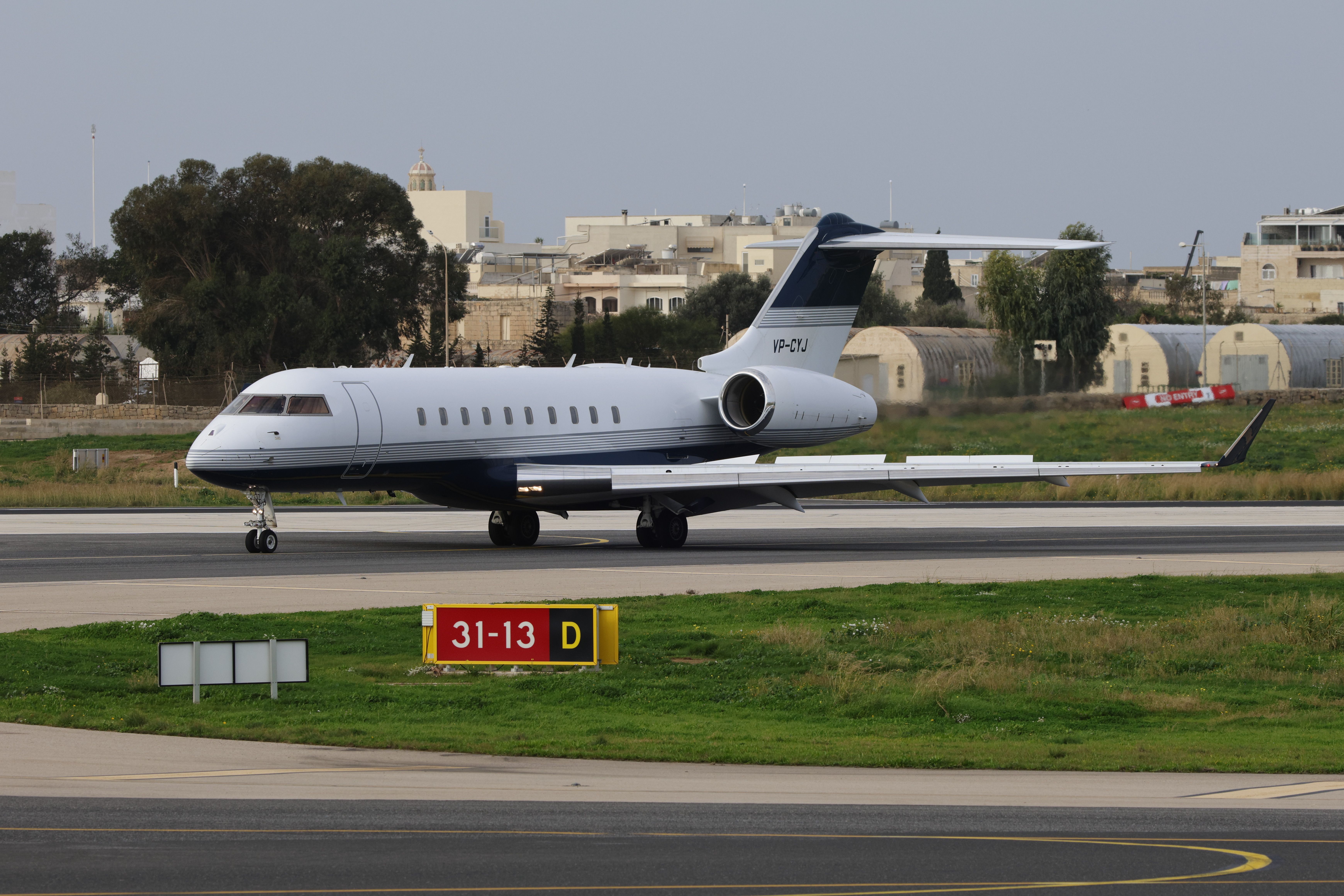
Private aviation is often described through visible symbols: aircraft size, cabin finishes, range, and airport access. Yet for experienced owners, family offices, and international executives, the decisive question is increasingly less visible. It is not simply which aircraft can fly, but how much uncertainty can be removed from the journey before the aircraft ever leaves the ground.
That shift matters. A private aircraft may be a valuable asset, but the ownership experience is created by the operating system around it: aircraft availability, crew continuity, maintenance planning, route coordination, regulatory awareness, ground handling, and the ability to adapt when a business or family itinerary changes. In this context, private aviation becomes not only a travel product, but a strategic mobility service.
For VERTU England, this is the relevant lens through which to understand Global Top Private Jet Operation and Management. Positioned as a global travel and mobility concierge, the service is designed around a simple value promise: seamless, safe, and efficient air travel ownership.
The aircraft is only one part of the decision
At the highest end of the market, aircraft access is no longer the only differentiator. Leading providers increasingly compete through the depth of the management layer that surrounds the flight. Public industry comparisons commonly assess private aviation companies across safety culture, fleet depth, geographic reach, availability, service quality, technology, and sustainability rather than aircraft alone.
This is a useful distinction for prospective owners. A jet can offer extraordinary performance, but performance is experienced through a broader chain of decisions. Who monitors the aircraft's readiness? Who coordinates maintenance windows with the owner's calendar? Who protects continuity across multiple countries? Who can present a credible alternative when weather, airport restrictions, or a last-minute change affects the original plan?
The answer determines whether ownership feels liberating or administratively demanding.
| What the client sees | What must be managed behind it |
|---|---|
| A punctual departure | Aircraft readiness, crew scheduling, permits, slot coordination, and ground handling |
| A consistent cabin experience | Fleet standards, maintenance control, service protocols, and crew continuity |
| Global itinerary flexibility | Route planning, airport intelligence, regulatory coordination, and contingency options |
| Predictable access | Capacity planning, peak-period management, and clearly defined programme terms |
The luxury, therefore, is not created by removing every process. It is created by placing the right processes in the hands of a capable manager so that the client does not need to carry them.
From ownership of an aircraft to ownership of a system
The market's leading access models illustrate this evolution. VistaJet publicly presents investment-free membership options, access to a global fleet, and different levels of availability according to the programme selected. Its VJ25 membership offers guaranteed availability on non-peak and most peak days, while the VistaJet Program states guaranteed aircraft availability every day of the year, subject to the applicable agreement terms.
Flexjet, meanwhile, has continued to expand the meaning of premium access through fractional ownership, dedicated crews, bespoke cabin design, and newer long-range aircraft. In its September 2025 announcement, the company introduced three Gulfstream G700 aircraft into its fleet and positioned the programme around immediate access, large-cabin performance, and a more personalised ownership experience.
These examples point to a broader industry direction. The strongest private aviation proposition is not necessarily the largest catalogue of aircraft. It is the most coherent relationship between access, accountability, and personalisation.
For a client, the practical question becomes: what form of control is actually required? Some travellers need a fixed annual commitment. Others require a broad global fleet without the responsibilities of full ownership. Some value a dedicated aircraft and crew; others prioritise aircraft interchange according to each mission. A credible aviation manager does not force every client into one model. It clarifies the trade-offs and aligns the operating structure with the client's real travel pattern.
Why continuity matters more than spectacle
A premium aircraft can create an impressive first impression. Continuity creates trust.
Continuity means that the client's preferences are not treated as isolated instructions but as part of a living travel profile. It includes preferred departure windows, cabin requirements, family considerations, meeting schedules, dietary expectations, connectivity needs, and the level of discretion expected at each stage of the journey. It also means that the service remains legible when the itinerary crosses borders, time zones, and operating environments.
This is particularly important for clients whose travel is not a sequence of individual flights. A single month may involve a board meeting in London, a private gathering in the Gulf, a family stay in the Mediterranean, and an onward journey to Asia. The value of a private aviation manager lies in seeing the itinerary as one connected mobility brief rather than four unrelated bookings.
That approach changes the language of service. Instead of asking only whether a flight can be arranged, the manager considers whether the entire journey is coherent, resilient, and proportionate to the client's time.
Safety is a culture of decisions
Safety should never be reduced to a marketing adjective. It is a discipline expressed through operational choices, crew standards, maintenance oversight, compliance, risk assessment, and the willingness to recommend a different plan when the original plan is no longer the right one.
Publicly available information from major operators shows how safety credentials, maintenance infrastructure, crew training, and operational standards are presented as part of the total service proposition. Flexjet, for example, describes its audit, safety, maintenance, and training frameworks alongside its ownership programmes rather than treating them as separate from the client experience.
For VERTU's global mobility concierge positioning, this principle is central. Seamless travel does not mean promising that every journey will unfold without change. It means ensuring that change is handled with calm, informed judgment, transparent communication, and an appropriate alternative.
Efficiency is the preservation of attention
The most valuable resource in private aviation is often not speed. It is uninterrupted attention.
A well-managed journey protects the client from fragmented coordination: multiple vendors, repeated confirmations, inconsistent service standards, uncertain aircraft substitutions, and avoidable last-minute decisions. The objective is to make the travel experience feel simpler without making the underlying operation simplistic.
This is where the phrase air travel ownership deserves careful consideration. Ownership should not be measured only by possession of an aircraft. It should be measured by the quality of control, visibility, and support surrounding that aircraft. If management is weak, ownership can become another demanding administrative responsibility. If management is strong, the aircraft becomes what it should be: a dependable extension of the client's life, work, and global commitments.
A more considered definition of luxury mobility
The next era of private aviation will not be defined by spectacle alone. It will be defined by the quiet competence of the operating layer: the ability to anticipate, coordinate, verify, and adapt across a global network while preserving a consistent human relationship.
That is the role of a Private Aviation Manager. Not simply to source a jet, but to interpret the client's mobility requirements, structure the right access model, coordinate the operational details, and protect the quality of the journey over time.
For clients seeking seamless, safe, and efficient air travel ownership, the most important investment may therefore be the decision about who manages the complexity. The aircraft remains essential. But the true luxury is the confidence that every flight belongs to a larger, better-governed system.